
Human Resources (HR)



From skilled trades to professional services, job opportunities at Miami-Dade County include just about every industry and every interest. Explore our offerings and find your fit.

Miami-Dade County provides a comprehensive and competitive benefits package that supports you and your family.

Enet is Miami-Dade County's one stop shop for employee services and information.

As part of our proactive work in eliminating and preventing discrimination and harassment, we develop and implement programs that ensure diversity and a supportive work environment.
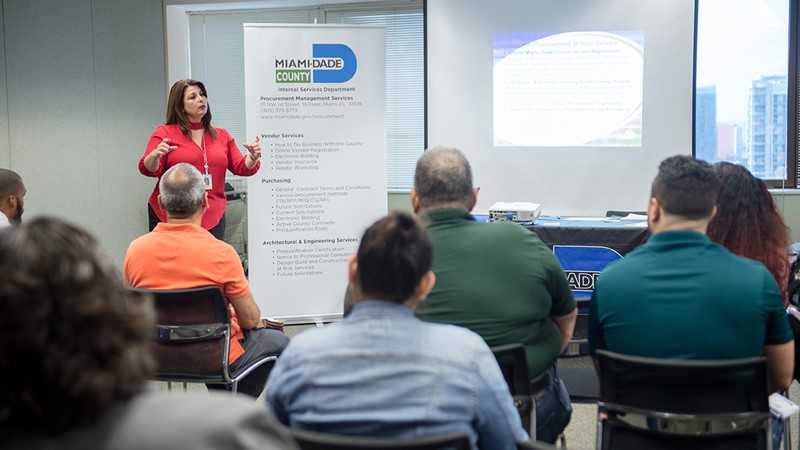
The County provides many training and professional development opportunities for its workforce.

Plans, directs, develops and coordinates negotiation and administration of all County collective bargaining agreements in accordance with Florida statutes.
News & Events

The ITHRIVE @ Miami-Dade County initiative aims to help employees achieve their full potential by serving as a hub for information and resources while creating a sense of unity through shared stories of our organization’s outstanding work.
Forms & Resources

About Us
The People and Internal Operations Department ensures efficient County operations and fosters a thriving workforce by integrating internal services and human resources management. The department provides facility, construction, fleet, and risk management, along with ADA compliance, real estate, security and parking services.
The People and Internal Operations Department ensures efficient County operations and fosters a thriving workforce by integrating internal services and human resources management. The department provides facility, construction, fleet, and risk management, along with ADA compliance, real estate, security, and parking services.
It supports workforce development through performance management, employee training, diversity programs, and collective bargaining, while addressing workplace policies, payroll, and workforce metrics. Additionally, the department resolves discrimination cases through investigation and mediation. Serving County departments, employees, and the community, it is committed to operational excellence and an equitable workplace.