Housing Development Opportunities


Learn more about these opportunities here or contact our staff if you are interested in discussing specific development plans.
Workforce Housing
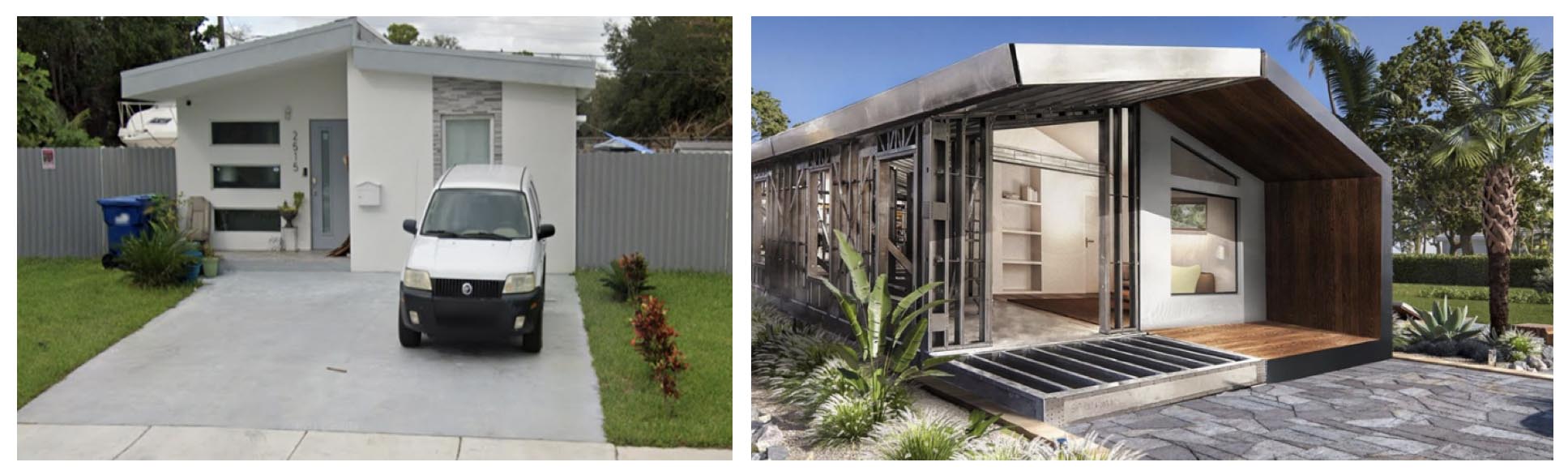
Families and individuals with incomes ranging from 60 to 140 percent of the County’s median income constitute the workforce target income group and is the focus of our workforce housing program. The Area Median Income (AMI) for an individual living in Miami-Dade County is currently $68,300.
The benefits of building workforce housing include:
- Impact Fees are waived for units designated as workforce housing and target up to 120% of AMI.
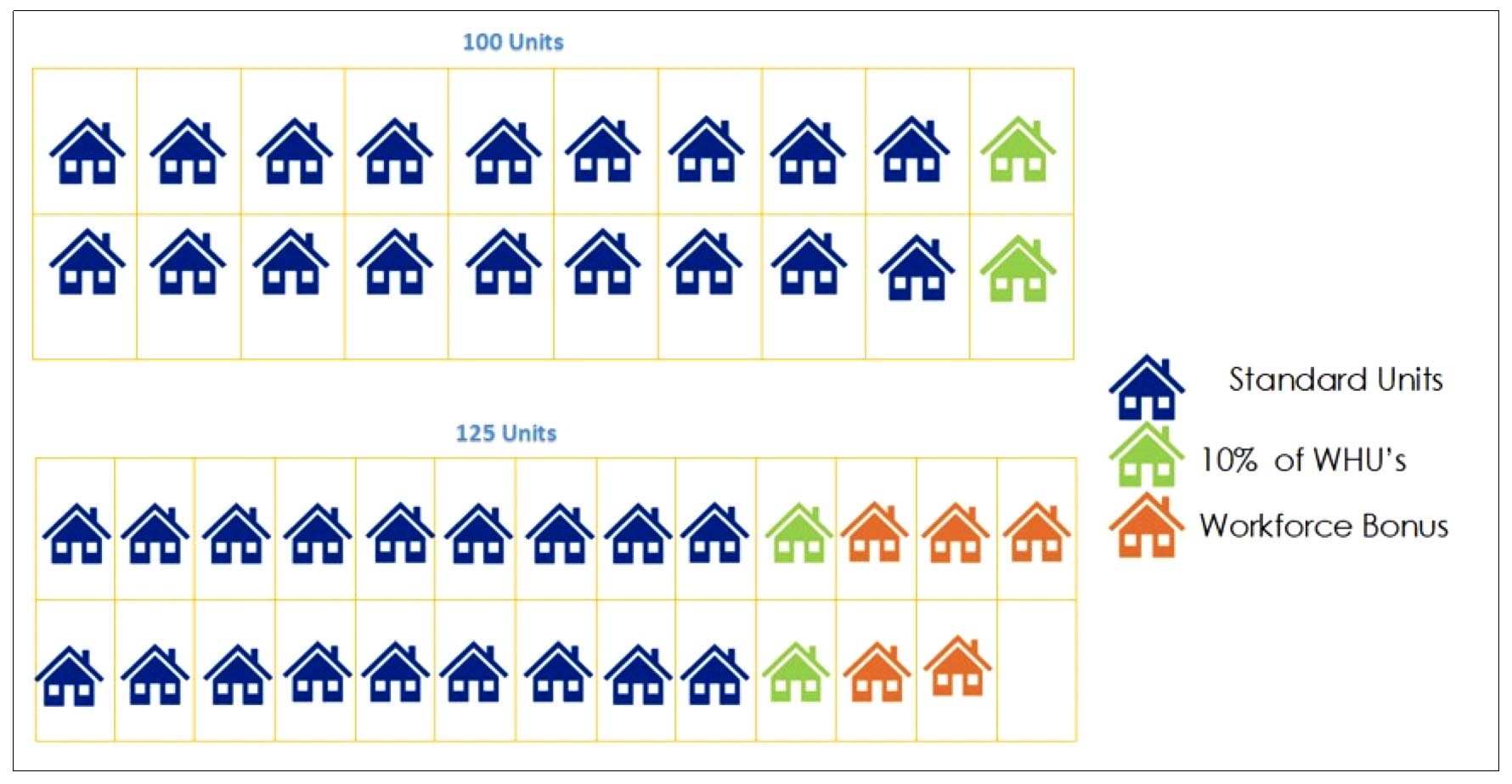
Expedited Construction Plan Review
Expedited Plan Review Across the County
Mayor Daniella Levine Cava's Building Blocks Program & HOMES Plan
- A partnership with the Miami-Dade County School Board to develop new workforce housing projects at three School Board-owned underused properties that will generate hundreds of additional workforce housing units for teachers.
- Funding for a community land trust to offer long-term affordability opportunities.
- Creation of the Building Blocks Fund, an impact pool that brings together private and nonprofit funders to finance the development of affordable and workforce housing.
To better explain how developers of affordable and workforce housing may benefit from these incentives, the Departments of Regulatory and Economic Resources (RER) and Housing and Community Development (HCD) offer online workshops on every month.
Quarterly Developer Forum
If you are an affordable housing developer, we invite you to join our quarterly meetings that go over the housing development and approval process. RER and other County staff discuss new ordinances, policies, permitting, regulations, plan reviews and more to help developers navigate the housing development process. Sign up to participate in meetings.
Incentives to Enable Development on Infill and Irregular Lots Miami-Dade County has amended the code to allow for the development of legally established lots that currently do not meet the minimum lot size and width. Previously, a public hearing was required for any proposed development on such lots. To discuss development options for irregular lots, email [email protected] or call 305-375-2513.
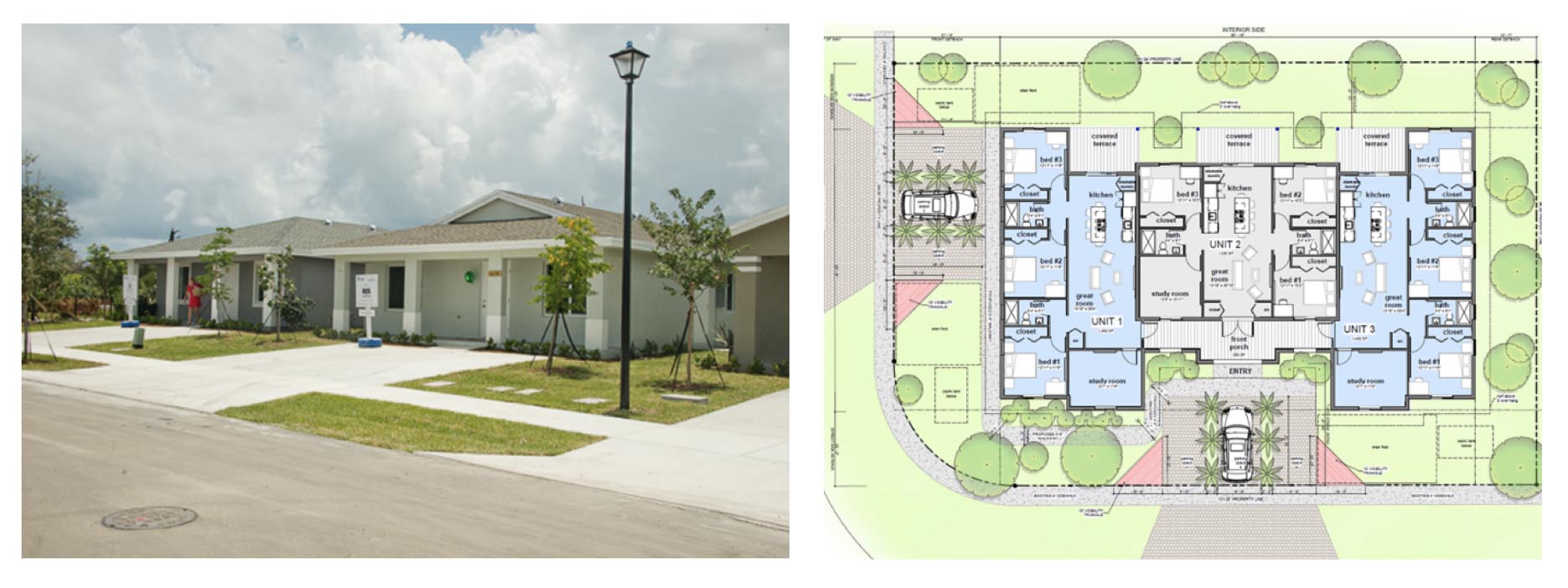
Accessory Dwelling Unites (ADUs)
Urban Centers and Rapid Transit Zones
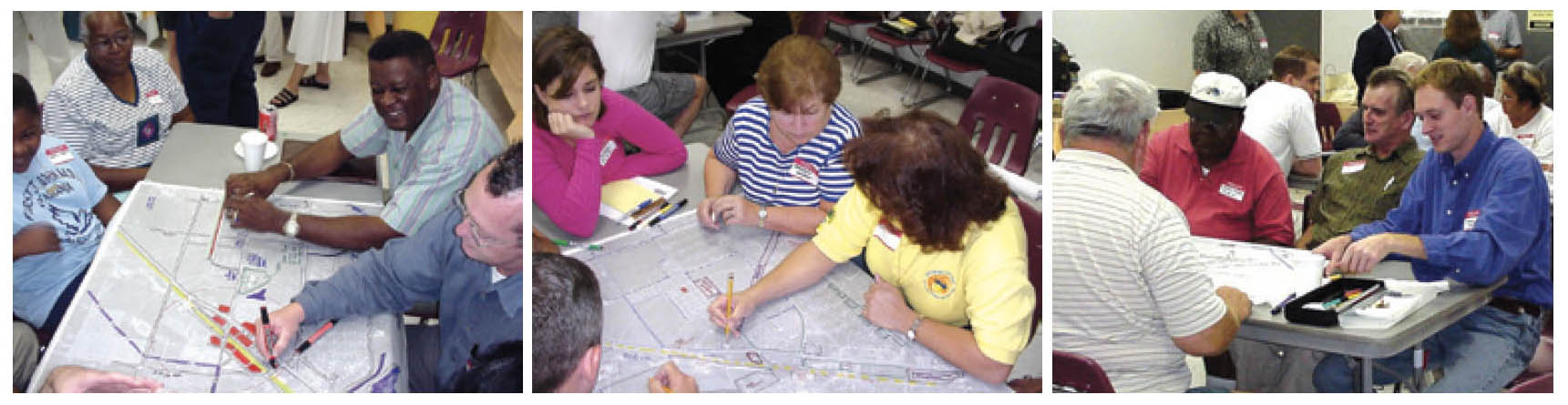
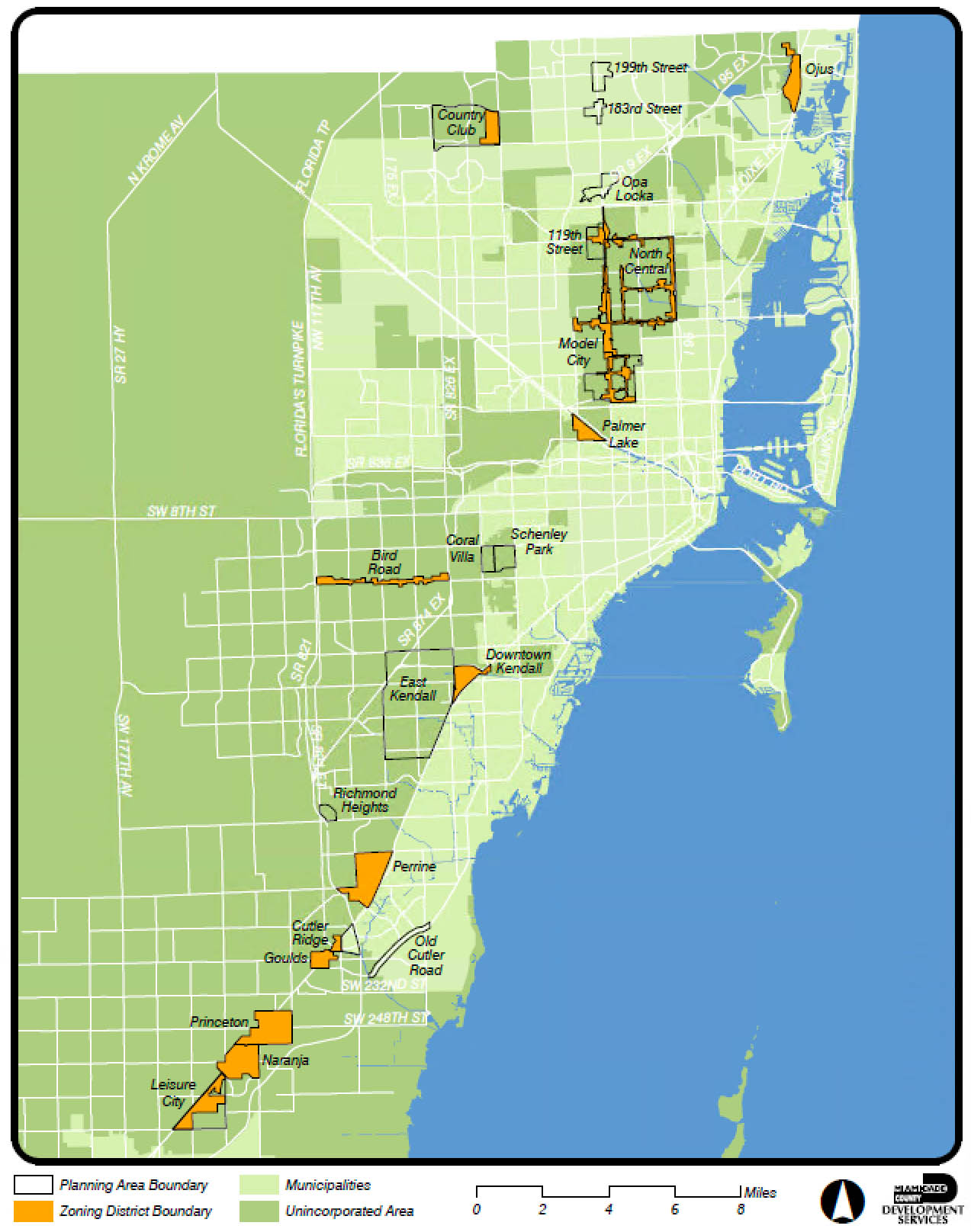
Urban Centers are created through the charrette process, an intensive, public planning workshop that seeks the consensus of all the stakeholders of the subject area. We use charrettes so that the public can provide their input and to develop the community's vision for its growth and future development.
The main benefits of developing within the Urban Centers is that greater density and intensity is allowed as of right. To help initiate immediate development, the County provides the Administrative Site Plan Review (ASPR) process. This allows applicants to have their site plans that conform to the Urban Center’s regulatory framework go through an administrative review. It then grants them the ability to then go straight to permitting, because the adoption of the Urban Center itself included a public hearing and established the development parameters in the area. If requested, an expedited review of five business days is available. To discuss development options in Urban Centers, email [email protected].
Urban Centers
- Downtown Kendall Urban Center District (DKUCD)
- Naranja Community Urban Center District (NCUC)
- Goulds Community Urban Center (GCUC)
- Princeton Community Urban Center (PCUC)
- Ojus Urban Area (OUA)
- Perrine Community Urban Center (PECUC)
- Leisure City Community Urban Center (LCUC)
- Cutler Ridge Metropolitan Urban Center (CRMUC)
- Model City Urban Center (MCUC)
- North Central Urban Area (NCUA)
- Bird Road Corridor Urban Area (BRCUA)
Residential Housing Capacity within Urban Centers
| Urban Center | Area (in acres) | Residential Capacity |
|---|---|---|
| Bird Road Corridor | 249.6 | 6,065 |
| Country Club | 246.7 | 450 |
| Cutler Ridge | 190.7 | 5,953 |
| Downtown Kendall | 271.1 | 2,072 |
| Goulds | 150.8 | 2,505 |
|
Leisure City |
373.8 |
5,657 |
|
Model City |
254.7 |
4,876 |
|
Naranja |
475.9 |
5,560 |
|
North Central |
1,045 |
22,878 |
|
Ojus |
274.9 |
5,150 |
|
Palmer Lake |
251.6 |
11,112 |
|
Perrine |
623.8 |
4,968 |
|
Princeton |
586.4 |
10,057 |
|
Total Residential Capacity |
87,303 units |
Source: Existing Land Use Data/Planning Research, Dec. 2022
Rapid Transit Zones
Benefits of the RTZs
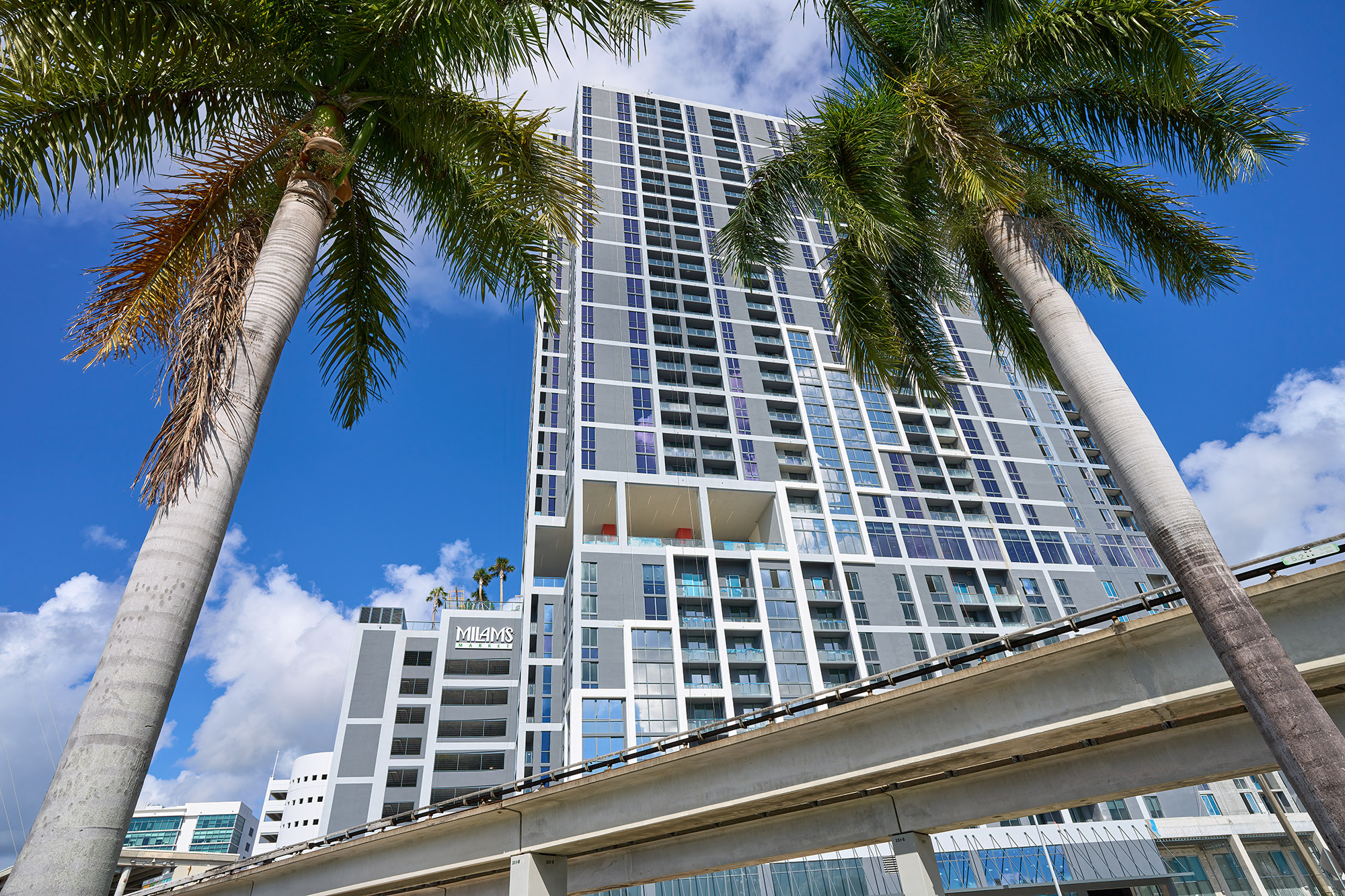
For sites located within the RTZs, the Department of Regulatory and Economic Resources (RER) provides for the land use intensities and densities that would help foster Transit-Oriented Development, as well as a predictable and streamlined zoning and permitting process that is within the County's purview. To discuss development options in RTZs, email [email protected] or call 305-375-2891.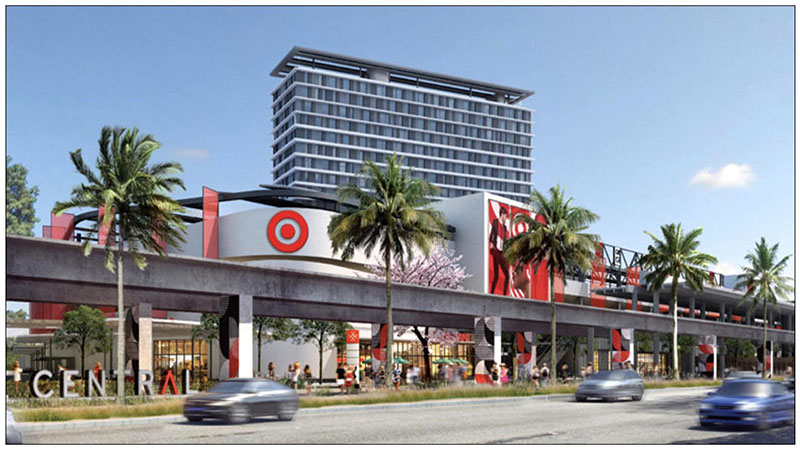
Tools to Help Your Plan Your Project
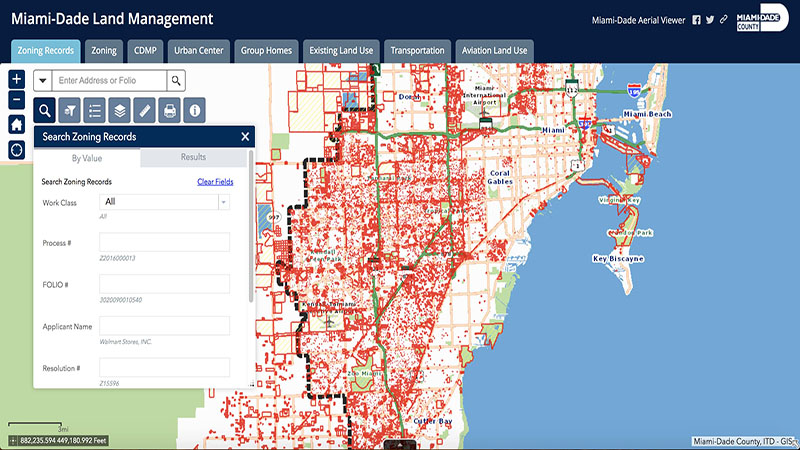
Explore the Land Management Viewer
As you navigate the Viewer, the tabs along the top provide details for each category. In the Zoning viewer, find the site-specific information with regards to its Zoning District; and under CDMP, find the land use designation for any property within the unincorporated Miami-Dade County or under RER’s regulatory jurisdiction. The drop-down menus indicate additional information regarding the zoning category and the density thresholds for the pertinent land use designation.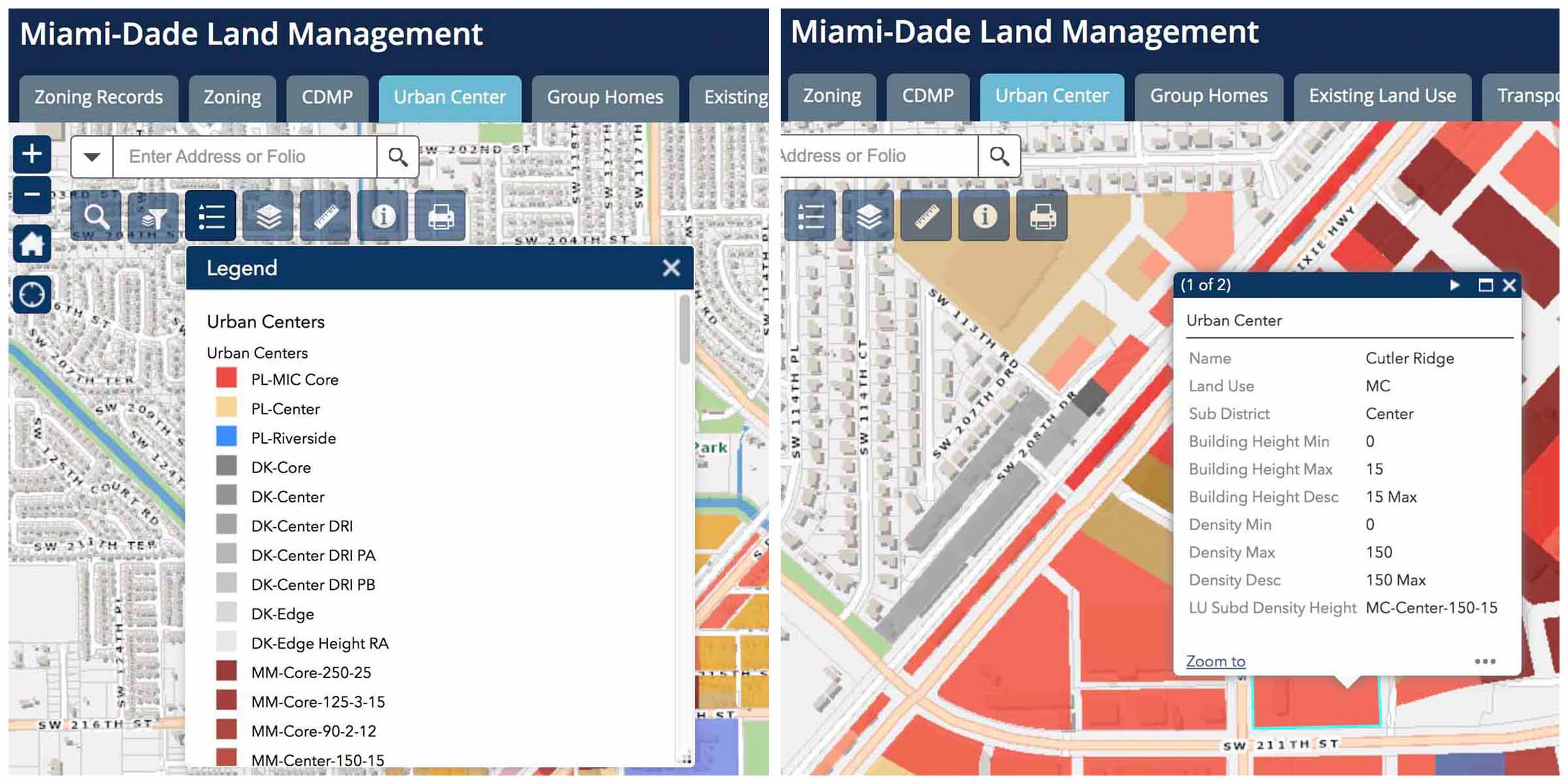
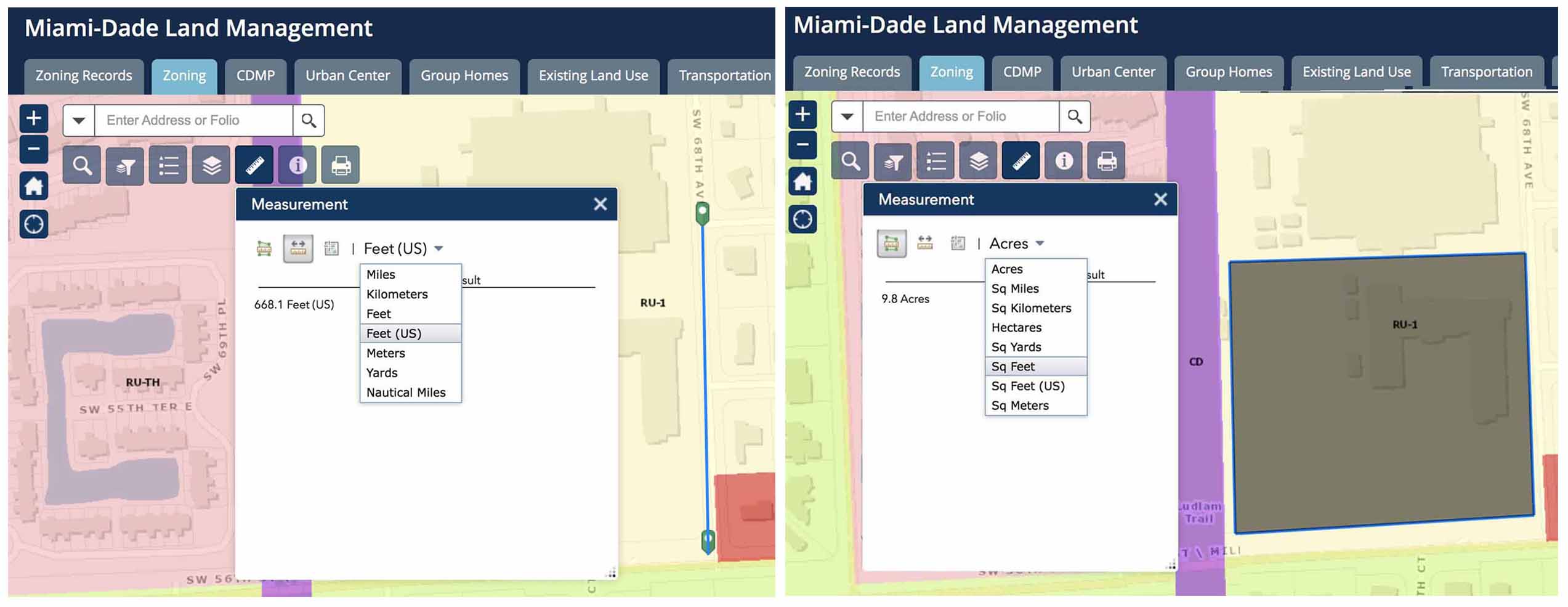
If you need to know the distance from the nearest roadway, development boundary or another site or a specific use or are unsure about the general area for a specific site, the handy Calculation Tools help you find the area and distance in just a few clicks.
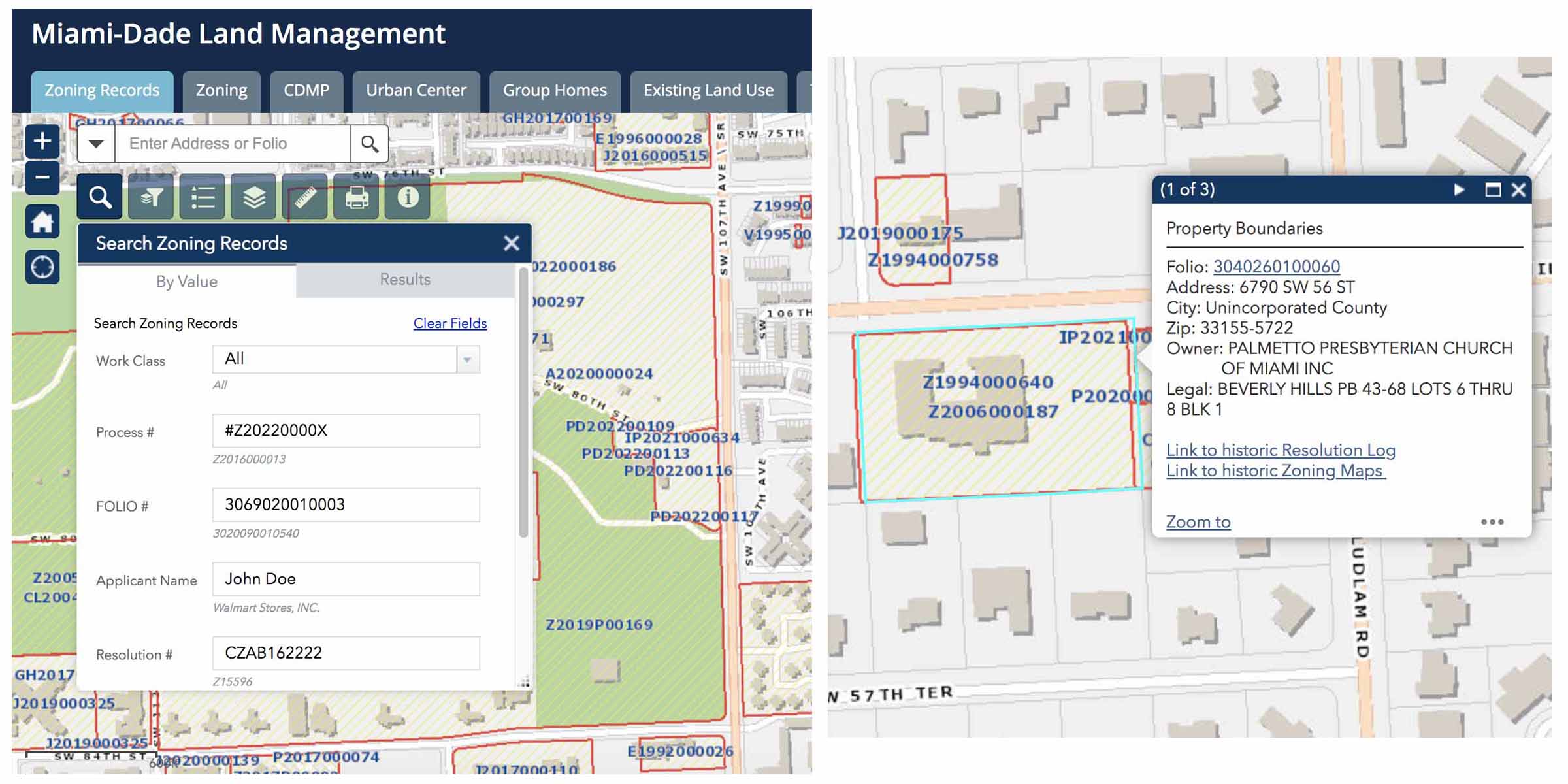
The Zoning Records viewer provides site-specific zoning information for public hearing applications and property appraiser information, as well as the zoning history and resolutions from prior hearings and includes links to historic maps. To search you must have either the address, folio number or application number to readily access all the information available in our system.
All this valuable information can help you find parcels or locations that are right for your project or help you decide if a parcel or location you already have in mind is the most suitable one for your project.
Similarly, the Water and Sewer Department (WASD), has a variety of helpful GIS tools. Through these, you can search construction project information to determine if properties are connected to water and sewer systems or a septic tank, find ongoing construction projects, access various agencies with permitting process and more.
If you would like our staff to professionally research parcels and provide official interpretation letters, this service is available for a fee. Additionally, Development Services staff is available to speak with you today! We are here to discuss your ideas and answer your questions and will work with you to make your affordable or workforce housing project a reality.
About Us
The Department of Regulatory and Economic Resources' mission is to enhance and protect the quality of life in Miami-Dade County through visionary planning, efficient land development and sound regulation that foster resilience, sustainable growth and long-term economic vitality.

Regulatory and Economic Resources
Lourdes M. Gomez
Stephen P. Clark Center
111 NW 1st Street,
11th Floor
Miami, FL 33128
305-375-2877 | [email protected]
Herbert S. Saffir Permitting and Inspection Center
11805 SW 26 Street,
Miami, FL 33175
786-315-2000