Parks and Open Spaces Master Plan
The goal of this Master Planning process is to create a seamless, sustainable system of parks, recreation and conservation open spaces for this and future generations.
- Every resident in the County can walk (within five minutes) to a central neighborhood park and civic space for picnics, special events, informal play and socialization.
- Every resident can safely and comfortably walk, bicycle, or take transit to community parks, recreation centers and special use/sports facilities.
- Parks provide for a balance of active and passive uses.
- The County Parks Department works with every municipality and the school district to provide public access to schools, city parks and County recreation areas.
- Equitable public access is provided to lakes, beaches and other major natural features.
- Conservation areas and critical habitat are protected from over-use and negative impacts.
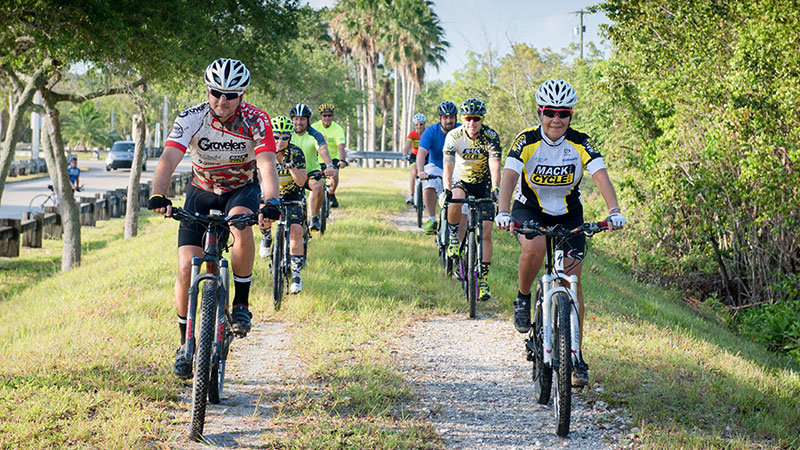
- An interconnected network of shaded and safe bikeways and trails connect to parks, neighborhoods, schools, employment centers, civic buildings, and other community destinations.
- Existing streets are transformed into tree-lined boulevards and parkways that define the County's urban form.
- Bus transit is provided to every park and civic site.
- Public art, signage and cultural/historical exhibits are integrated into every park and public realm/infrastructure project to "tell the County’s story" and to create a sense of place.
- The County's significant cultural and historical sites are protected, maintained, and promoted.
- Park improvements are used as catalysts for neighborhood stabilization and/or redevelopment.
- Parks are designed to reduce energy and water consumption, and to serve as models for sustainable development countywide.
- Parks are designed to be flexible in order to accommodate ever-changing recreation trends and demographics.
- Residents of surrounding neighborhoods are engaged in the planning and design of each park.
- Seamlessness
- Every element of the County, including neighborhoods, parks, natural areas, streets, civic centers and commercial areas, should be connected without regard to jurisdiction.
Beauty- Every public space, including streets, parks, plazas and civic buildings, should be designed to be as aesthetically pleasing as possible, and to complement the natural and cultural landscape.
Access- Every resident should be able to safely and comfortably walk, bicycle, drive and/or ride transit from their home to work, school, parks, shopping and community facilities.
Equity- Every resident should be able to enjoy the same quality of public facilities and services regardless of income, age, race, ability or geographic location.
Sustainability- Every action and improvement of the Park System, including facilities, programs, operations and management, should contribute to the economic, social and environmental prosperity of the County.
Multiple Benefits- Every single public action should generate multiple public benefits to maximize taxpayer dollars.
- Below are several plan document files pertaining to different programs and divisions within the Miami-Dade Parks, Recreation and Open Spaces Department system.
- Working together to form a coalition of:
- City parks in Miami-Dade County
- County parks in Miami-Dade County
- State parks in Miami-Dade County
- Federal parks in Miami-Dade County
- Non-profit partners
- If you are interested in sponsorship of the Great Park Summit, please contact the Office of Business Development & Fundraising at 305-755-7804.For corporations and foundations sponsoring this event, please make checks payable to:Miami-Dade Parks & Recreation275 NW 2nd StreetMiami, FL 33128Attention: Susan Ervin

Parks, Recreation and Open Spaces
Christina WhiteDirector
Hickman Building
275 NW 2nd Street,
Miami, FL 33128
305-755-7800