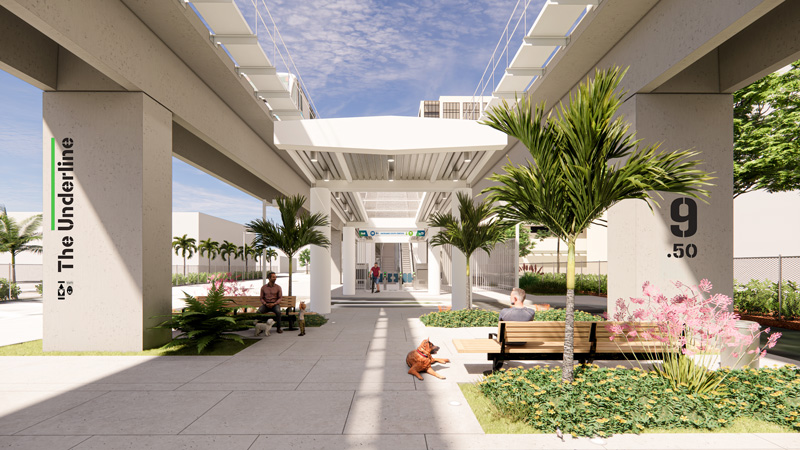
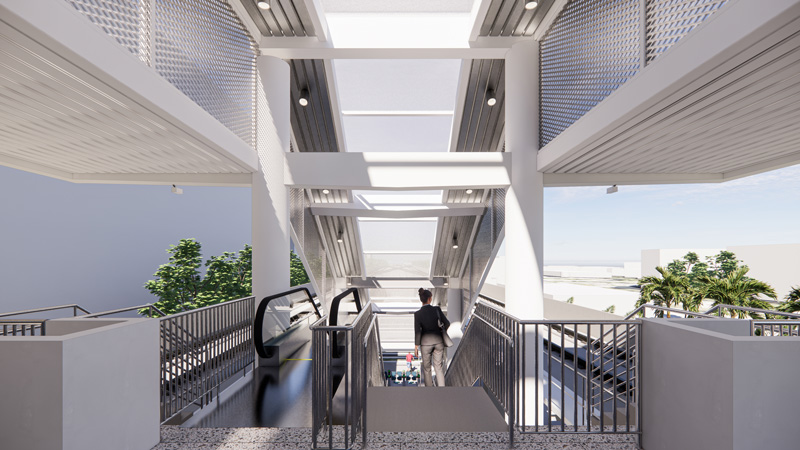
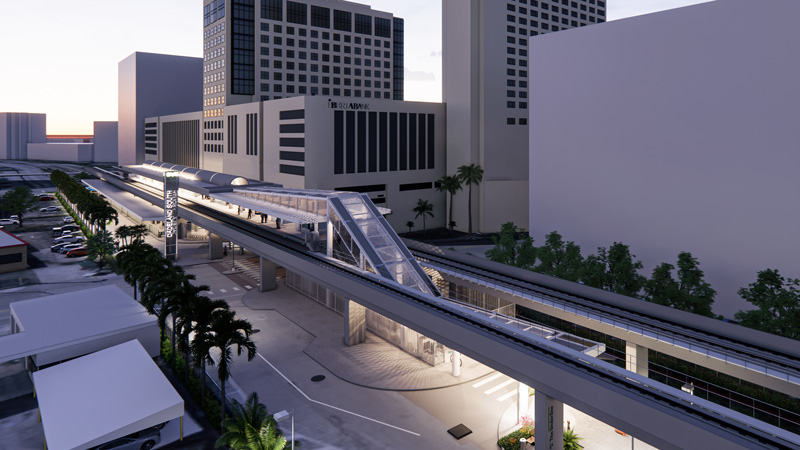
The Dadeland South Intermodal Station incorporates sustainability features designed to conserve energy and water, improve connections between transportation options, and reduce environmental impacts during construction and station operations.
These features support the project’s pursuit of Leadership in Energy and Environmental Design (LEED) certification, a green building rating system developed by the U.S. Green Building Council.
Intermodal Connectivity (Transit connections)
The station connects riders to multiple bus routes and provides connections to airport and regional rail services. A designated passenger drop-off area supports transfers between transportation options.
Dadeland South intermodal Station is connected to the following intermodal connectivity features:
- 3+ bus routes at station
- Short-term and Long-term bicycle storage spaces at station
- An airport within one connection and total transit travel time of less than 1.5 hours
- Regional or commuter rail within one connection and total transit travel time of less than 1 hour.
- Designated passenger drop off area.
Construction Activity Pollution Prevention
During construction, several measures were performed to control soil erosion, water sedimentation and airborne dust pollution. This way, we are reducing construction project disturbances to neighboring properties, rainwater systems, and the site itself.
Sustainability Features:
- Bicycle facilities
Short-term and long-term bicycle parking supports riders who travel to the station by bicycle. - Electric vehicle charging
The project includes electric vehicle charging in the station parking lot. - Water conservation
Water-efficient plumbing fixtures help reduce potable water use at the station. - Energy efficiency
Energy-efficient heating, ventilation and air-conditioning systems and LED lighting help reduce electricity use at the station. - LED lighting
LED lamps support efficient lighting and avoid the mercury used in some other types of lamps. - Refrigerants
The project avoids chlorofluorocarbon-based refrigerants, helping protect the ozone layer. - Building product disclosures
Environmental product declarations provide information about the environmental impacts of building materials used in the project. Material ingredient disclosures, where available, provide additional information to support product selection. - Low-emitting materials
Applicable adhesives, sealants, paints, coatings, flooring, ceilings, walls and insulation meet low-emitting material requirements to help protect indoor air quality. - Site location
The station is located in an area identified through community planning for additional development. Its location supports the project’s pursuit of the High Priority Site credit. - Site assessment
An assessment of site conditions informed the project’s design and helped the team evaluate sustainability options. - Construction pollution prevention
Construction measures address soil erosion, sediment runoff and airborne dust to help limit impacts on neighboring properties, drainage systems and the project site.\ - Green cleaning
The station’s green cleaning approach calls for products that meet sustainability criteria and reduce the use of harmful chemicals. - Integrated pest management
An integrated pest management policy supports the use of less hazardous pest control methods to protect station users and the environment.
Learn more about LEED
LEED evaluates sustainability measures such as energy and water efficiency, materials, site planning and indoor environmental quality. Projects must meet prerequisites and earn points through a review process to achieve certification. Visit the U.S. Green Building Council website